
Reviewed by the Accredited Practising Dietitians at Body Fusion.
Ever been stuck in the dairy aisle deciding between natural and Greek yoghurt? Full fat or low fat, plain or fruit flavoured? Yoghurt is a staple in a lot of households, but working out which is the best yoghurt for you is not always simple. This is a dietitian’s guide to choosing a healthy yoghurt, from Greek versus natural to reading the label for added sugar and saturated fat.
Greek yoghurt vs. Natural Yoghurt
Greek yoghurt is usually thicker and higher in fat than natural yoghurt. It is made by straining the yoghurt through a cloth or paper filter, which removes some of the liquid whey and gives it that creamy consistency. Because straining also concentrates the protein, Greek yoghurt is often higher in protein too. Natural (unstrained) yoghurt is thinner and generally lower in fat.
Fast fact: in Greece, strained yoghurt is traditionally made from sheep’s milk, but in Australia cow’s milk is usually used, which is why you will often see it labelled ‘Greek style’ yoghurt rather than ‘Greek’ yoghurt.
Full Fat or Low Fat?
This is a topical debate, and there is no single right answer, because it comes down to individual preference and your dietary or medical priorities. Full fat yoghurts are higher in saturated fat than their reduced fat and skim versions.
Where fat is concerned, unsaturated fats (from foods like olive oil, avocado, nuts, seeds and oily fish) are the ones most of us are encouraged to include more often. Full fat dairy is naturally higher in saturated fat and more energy dense, while reduced fat options are lighter and still count as a serve of dairy. Neither is off limits. The best choice is the one that fits your overall eating pattern, your preferences and any advice from your health team, so pick the one you will genuinely enjoy and feel good eating.
Which one to choose?
BOTH are great choices if eaten in their unflavoured form. If you compare the labels, full fat Greek yoghurt has a noticeably higher fat content than full fat natural yoghurt, while the reduced fat versions of each are much closer together. Rather than chasing a single ‘best’ product, it helps to know what to look for on the label.
What to Look for on the Label
Turn the tub around and check the nutrition information panel and ingredients list. A few simple things to look for:
- Ingredients: milk and live cultures near the top, with as few added extras as possible
- Saturated fat: lower is generally better if you are watching saturated fat, so compare per 100g between products
- Sugar: aim for a lower added-sugar option (more on the numbers below)
- Calcium: yoghurt is a handy source, so a higher calcium figure per serve is a bonus
- Protein: if you want a higher protein option, Greek and ‘high protein’ yoghurts usually list more protein per 100g
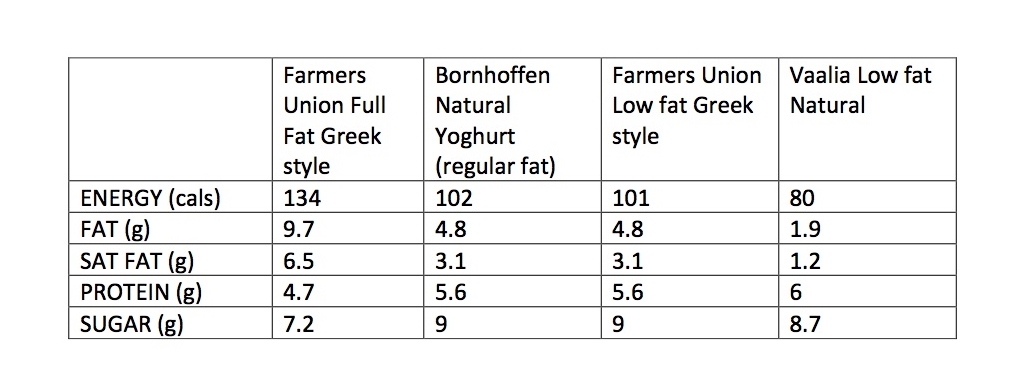
Recommended natural & greek yoghurts:




Sweetened or unsweetened?
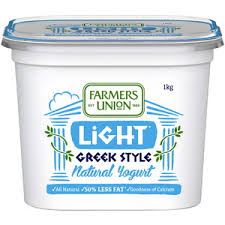
but the reality is that flavoured yoghurts can be a useful stepping stone. Some fruit flavoured tubs have around 28g of sugar per serve (about 6 teaspoons). Sugar on the label will rarely be below about 5g/100g, because that is the naturally occurring lactose from milk. It is the added sugar that is worth keeping an eye on, so if you are choosing a flavoured yoghurt, aim for under 10g of sugar per 100g.
If, like many people, you would like to retrain your taste buds, going straight from flavoured to plain can be hard. There are plenty of options, so here is a gentle way to step down:
- Step 1: Trial a lightly sweetened variety, for example a ‘naturally sweetened’ breakfast yoghurt.
- Step 2. Trial some different brands of fruit flavoured natural or greek style without added sugars BELOW 10g/100g.
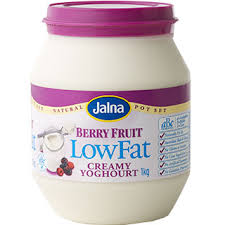
- Jalna Fruit
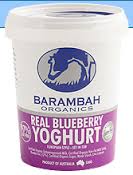
- Baramabah berry
- Tamar Valley no added sugar

- Step 3: Move to unflavoured natural or Greek style yoghurt and add your own flavour, like crushed nuts, sunflower or pepita seeds, cinnamon or fresh fruit.
Your Yoghurt Shopping Guide
- Flavour: plain natural or Greek style is the simplest starting point
- Fat: lower in saturated fat, around 3g/100g or less, if that is your priority
- Sugar: under 10g/100g if you are choosing a flavoured yoghurt
- Calcium: around 300mg per serve is a good marker
Match Your Yoghurt to You
- After more protein? Greek style or a high protein yoghurt gives you a bit more protein per serve to help meals and snacks feel satisfying.
- Cannot stand the taste of low fat? Stick with the full fat version you enjoy and be mindful of your portion size, for example 125g instead of 200g.
- Sugar craver? Step down gradually and add your own flavours. This takes time, so be patient and persistent.
- Had one bad experience? Try, try again. With so many varieties available, there is likely to be at least one you like.
Remember, a 200g tub of yoghurt counts as roughly one serve of dairy, which most adults are encouraged to include each day. Use it at breakfast, as a snack, in a smoothie, or stirred through a dressing.
More Everyday Nutrition Support
Small, everyday food choices like this add up over time. Our team supports clients with practical, evidence-based nutrition every day, whether that is help with weight management or support for gut health and IBS. For more ideas, browse our healthy recipes and nutrition articles.
Frequently Asked Questions
Which yoghurt is the healthiest?
There is no single healthiest yoghurt for everyone. As a general guide, plain natural or Greek style yoghurt with live cultures, lower added sugar (under about 10g/100g if flavoured) and a good calcium content is a solid everyday choice. The best yoghurt for you also depends on your preferences and your individual needs.
Is Greek yoghurt healthy, and is it better than natural yoghurt?
Both Greek and natural yoghurt can be part of a balanced diet. Greek yoghurt is usually thicker and higher in protein, while natural yoghurt is often lower in fat. Neither is simply better than the other; it comes down to what you are after, whether that is extra protein, a lighter option, or a particular taste and texture.
What is the best yoghurt for gut health?
Many yoghurts contain live cultures, and yoghurt can be part of a varied diet that includes a range of fibre and fermented foods. Evidence on specific strains and gut health is still developing, and everyone is different, so if you have ongoing gut symptoms it is worth speaking with an Accredited Practising Dietitian or your GP for tailored advice.
How much sugar should a healthy yoghurt have?
Plain yoghurt naturally contains around 5g of sugar per 100g from lactose, the sugar in milk. If you are choosing a flavoured yoghurt, aiming for under 10g of total sugar per 100g is a useful rule of thumb to keep added sugar in check. Checking the ingredients list also helps you see where the sugar is coming from.
Is high protein yoghurt a good choice?
High protein yoghurts can be a convenient way to add protein to breakfast or a snack, which many people find helps meals feel more satisfying. Check the label, as some are also higher in added sugar or sweeteners. As with any yoghurt, it works best as one part of a varied, balanced diet.
Get Personalised Advice
If you get confused reading labels, or you would like tailored, evidence-based support to eat well for your goals, our Accredited Practising Dietitians can help you in person across our Sydney clinics or by telehealth. Get in touch to book a consultation with a Body Fusion dietitian.
Body Fusion and the author are not affiliated with, or compensated by, any of the brands or products mentioned in this article.
This article is general nutrition information only and is not a substitute for personalised advice. For guidance specific to your circumstances, please consult an Accredited Practising Dietitian or your health practitioner.
